Understanding Pool Algae: Common Causes and Practical Ways to Address Them
Many pool owners have experienced the moment when clear water suddenly turns green or cloudy. It can be frustrating, especially when regular cleaning routines seem to be in place.
https://www.example.com/?YqoiQZ-0b5f8aAlgae growth in pools is a common issue, and it is rarely caused by a single factor. More often, it is the result of several small conditions aligning at the same time. Understanding these conditions is the first step toward keeping the water clear.
This article explains why algae develops in residential pools, the factors that can contribute to its growth, and the maintenance habits that many homeowners find helpful.
Why Algae Can Develop in a Pool
Algae spores are naturally present in the environment. They can enter a pool through wind, rain, or on swimwear and equipment. Under normal conditions, a well-maintained pool keeps these spores from becoming visible.
When certain factors change, such as a drop in sanitizer levels or an increase in nutrients in the water, algae can begin to multiply. The water may take on a green tint, and pool surfaces can feel slippery.
The good news is that algae growth is usually reversible. With consistent maintenance and attention to a few key areas, many pools return to clear water within a reasonable time frame.
Factors That Can Make Algae More Likely
Inconsistent Sanitizer Levels
Sanitizer levels that drop too low or fluctuate frequently are one of the most common contributing factors. Sunlight, warm water, and regular pool use all consume sanitizer over time.
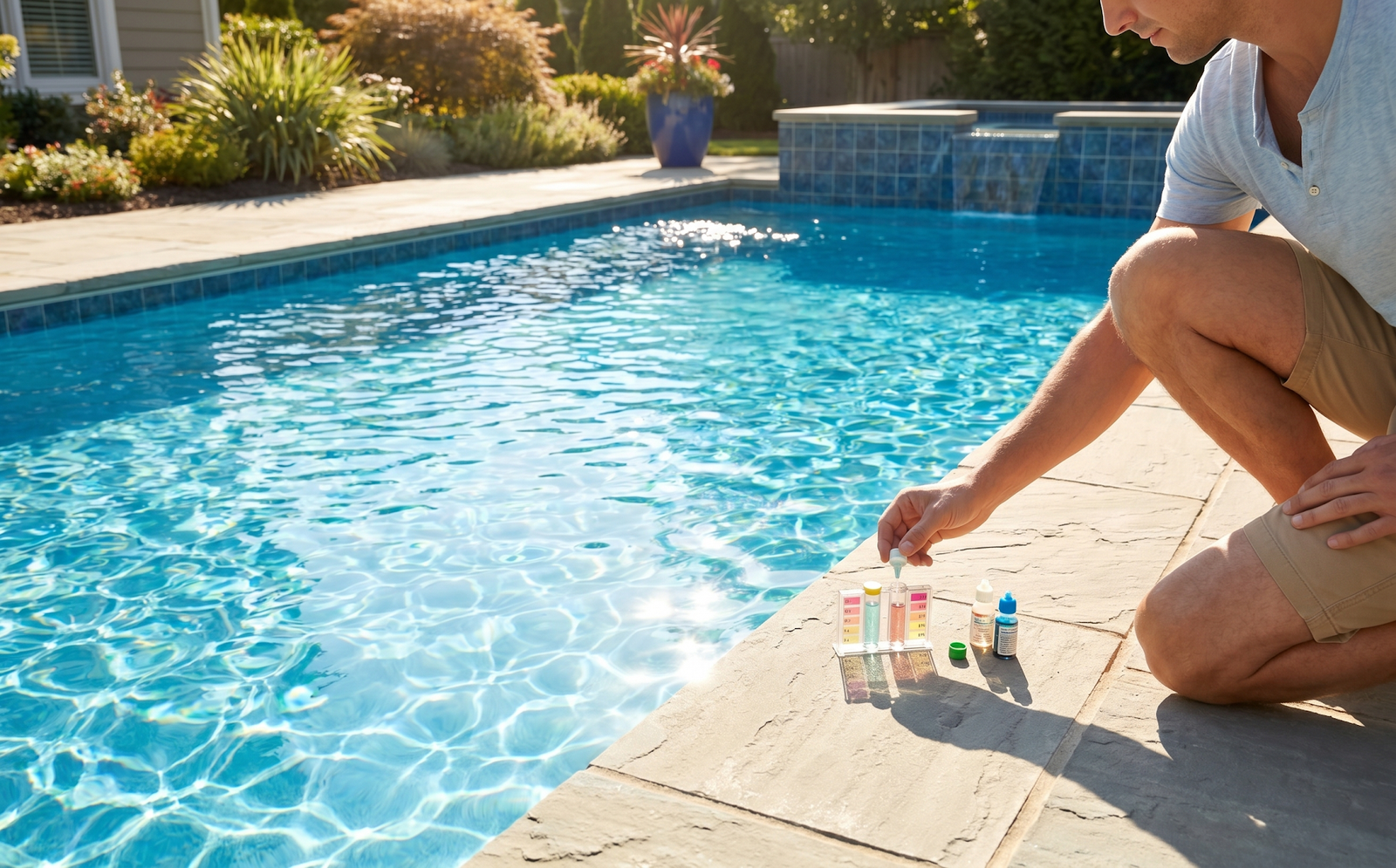
Testing the water every few days during warmer months can help you stay aware of changes. Many homeowners use a floating dispenser with slow-dissolving tablets to maintain a more consistent level between tests.
Always follow the instructions on the product label. If you are uncertain about the right approach for your pool, a local pool professional can provide guidance based on your specific setup.
Areas with Limited Water Movement
Water that moves slowly or stays still provides a more favorable environment for algae spores to settle. Common areas include steps, corners, and spots behind light fixtures or ladders.
Adjusting the direction of return jets to create better circulation can help. Running the circulation system for an adequate number of hours each day is another factor that many pool owners find makes a difference.
If algae tends to appear in the same area repeatedly, that spot may benefit from more frequent attention during cleaning.
Organic Material in the Water
Leaves, grass, insects, and other organic matter release nutrients as they break down. These nutrients can contribute to algae growth, even when sanitizer levels appear adequate.
Removing debris from the surface and floor on a regular basis helps reduce the amount of organic material available in the water. Skimming daily and vacuuming weekly are common recommendations.
A robotic pool cleaner may assist with this task by running on a schedule and collecting debris before it decomposes. It can be part of a more consistent maintenance plan for pool owners who want to reduce daily manual cleaning.
Surface Buildup
Pool surfaces can accumulate a thin film over time. This film can protect algae spores from chemical treatment, making it harder for sanitizers to reach them.
Brushing the walls, floor, steps, and waterline on a weekly basis can help prevent this buildup. It is a simple mechanical step that supports the chemical side of pool maintenance.
Brushing is especially helpful before adding any chemical treatments, as it exposes the surfaces directly to the water.
A Practical Maintenance Approach
Below are some steps that many pool owners include in their regular routine. They are not a guarantee against algae, but they can help reduce the risk.
- Test water chemistry every few days during warm weather
- Maintain a consistent sanitizer level
- Remove debris from the surface daily
- Brush walls and floor weekly
- Run the circulation system for an adequate number of hours each day
- Keep an eye on areas with limited water movement
- Check and clean the filter according to the manufacturer’s instructions
These steps work together. For example, brushing before adding treatment allows the chemicals to reach the surfaces more effectively. Removing debris before it decomposes reduces the nutrients available in the water. The combination of these habits is what many pool owners find most effective.
When to Seek Professional Advice
If algae persists despite consistent maintenance, there may be an underlying issue that requires a more detailed diagnosis. A pool professional can test for factors that standard home test kits do not measure.
Some examples of situations where a professional may be helpful:
- Algae keeps returning even when the water tests within normal ranges
- The filter seems to be working but the water stays cloudy for several days
- There is an unusual odor or staining on pool surfaces
- The pool has not been used or maintained for an extended period
In these cases, a professional can provide recommendations based on the specific conditions of your pool.
A Balanced View of Pool Maintenance
Algae is a common and solvable part of pool ownership. It does not mean the pool is beyond repair or that expensive equipment is needed.
Understanding what contributes to algae growth and addressing those factors through consistent, simple maintenance habits is often enough to keep the water clear. When in doubt, a pool professional is the best source of advice for your specific situation.